Control the
envelope.
We plan and install spray-foam assemblies for Middle Tennessee homes, shops, pole barns, and commercial buildings — sealing the roof, shell, and foundation so conditioned air stays where it belongs.
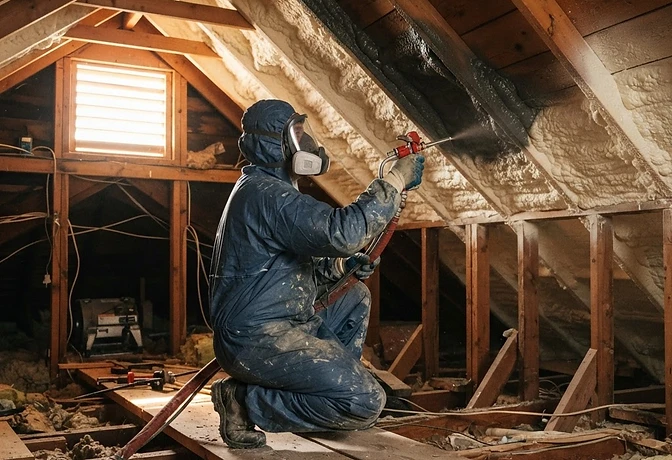
Heat, humidity, and the air you can't see.
Most comfort and moisture problems in a building come down to one thing: an envelope that isn't sealed.
Air leakage
Gaps and cracks let conditioned air escape and outside air in. Fiberglass and batt insulation slow heat movement but do not stop air — so the envelope leaks.
Humidity & condensation
Middle Tennessee humidity enters walls, attics, and crawlspaces, then condenses on cool surfaces. Over time that moisture feeds mold, mildew, and rot.
Uneven comfort
When the envelope leaks, some rooms run hot while others stay cold. HVAC works harder to keep up, and the building never feels settled.
Built for every assembly.
From the roof deck to the crawlspace, from pole barns to new construction — we design the right envelope for each part of your building.
Homes
Retrofits and existing-home sealing — attic, crawlspace, and accessible walls.
Attics + Crawl Spaces
Condition the roof deck and seal the foundation where the most air is lost.
New Construction
Design a continuous, airtight envelope before the walls close.
Pole Barns + Metal Buildings
Condensation control and climate command for post-frame and steel structures.
Commercial
Warehouses, workshops, and conditioned commercial envelopes.

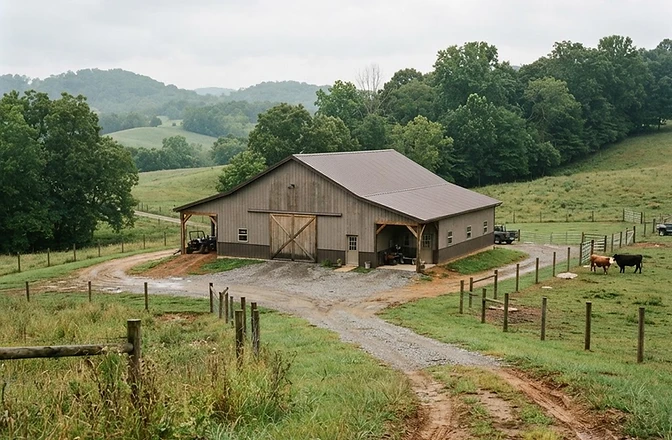
Turn a pole barn into a building that works.
Uninsulated post-frame buildings swing wildly in temperature and sweat with condensation. Spray foam creates a continuous envelope that helps control condensation, stabilizes comfort, and protects what you store — whether it is a workshop, garage, equipment, or living space.
- Condensation control on metal roofing and framing
- Comfortable workshops, garages, and conditioned space
- Sealing around posts and purlins for a true envelope
- Assembly planning around how you use the building
Assess. Specify. Install.
A deliberate process — not a one-foam-fits-everything approach.
Assess the building
We walk the structure, review the assembly, and identify where air, moisture, and heat are moving. No blanket recommendations — we start from what your building actually needs.
Specify the right assembly
We recommend where open-cell, closed-cell, or a combination fits each part of the envelope, sized to your cavity depth, climate, and goals.
Install and verify
We prep and protect the site, apply the foam, and walk the finished work with you to confirm coverage before cleanup.
The right foam for the assembly.
Both foams air-seal. The difference is density, R-value per inch, moisture behavior, and cost — so the choice depends on the assembly, not the building.
Open Cell
- Structure
- Soft, flexible, expansive
- Typical R-value
- ~R-3.5–4 per inch
- Vapor behavior
- Vapor-permeable
- Best fit
- Large cavities, sound control, value
Closed Cell
- Structure
- Dense, rigid, controlled lifts
- Typical R-value
- ~R-6–7 per inch
- Vapor behavior
- Class II vapor barrier
- Best fit
- Tight cavities, moisture, high R in less space
Application imagery.
A selection of spray-foam applications across assembly types. Representative application imagery — not specific client projects.

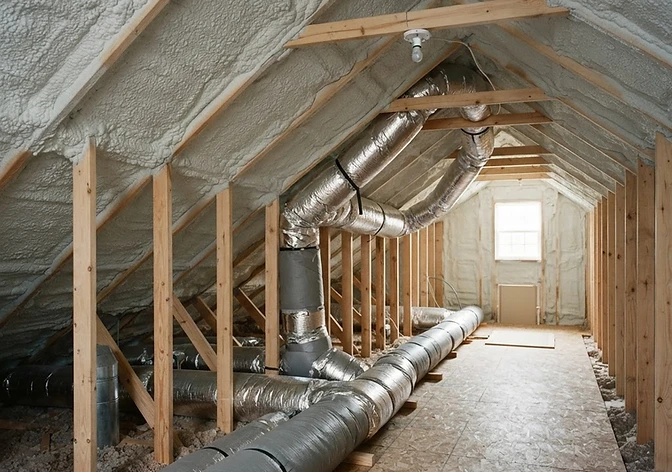
Conditioned Attic Conversion

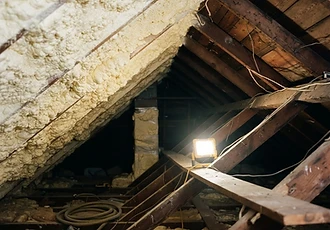
Whole-Home Retrofit

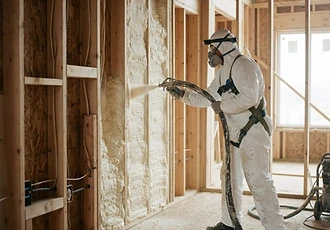
New Construction Envelope

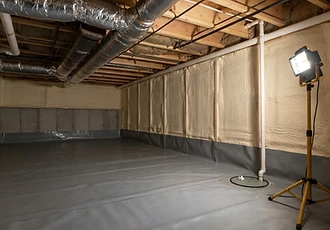
Crawlspace Conditioning
Representative application imagery.
Across Middle Tennessee.
We serve communities throughout the region. Select your city for local information.
What an estimate includes — and what to expect.
Straight answers to the questions we hear most.
Cost depends on square footage, foam type, and access. We provide a site-specific estimate after a free assessment — no blanket numbers.
Let's look at your building.
Request a free site assessment. We'll confirm we serve your area, review the building with you, and prepare a site-specific scope and estimate.